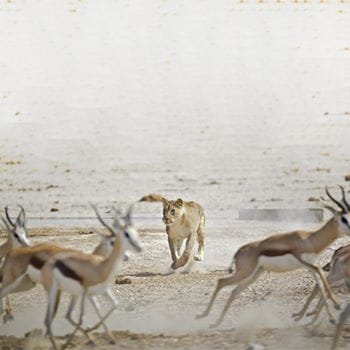
Imagine a gazelle on the Serengeti. He is happily munching some grass when he hears rustling in the tall grass behind him. He quickly orients to the noise, turning both ears and eyes in that direction. He sees nothing, but his nervous system is in “watch out” mode. Hypervigilance, jumpiness, and feelings of being unsettled are often characteristic of stage one of the crisis response.
He does not know that a lion is stalking him in the tall grass. Suddenly, the lion springs from the grass, claws extended. The gazelle takes off, running for his life at full speed. His brilliant body shuts down unnecessary tasks like digestive and mating functions, pulling blood from those areas and pushing it to his legs for the run. It is an all-out effort to flee the lion. This is a stage two crisis response, sometimes experienced as a panic attack, the feeling to run, fight or hide.
The lion catches up to the gazelle and tackles him, taking him by the throat. The gazelle’s body prepares for shutdown as he surrenders to the lion’s jaws. He tried to get away, but it didn’t work. The gazelle’s body begins to feel disconnected from the pain, pulling his consciousness away from the jaws of the lion. However, his body maintains tension because there is a slight chance he may still be able to get away.
The lion is tired from the run and may not have the energy to make the kill. Feeling floaty, yet keyed up, represents stage three of the crisis response, resulting in feeling simultaneously panicky and spacy.
The lion increases his pressure on the gazelle’s neck. It appears the lion does have the energy to make his kill. The gazelle’s body knows it is over, and time is short. The body completely releases and goes limp – representing stage four of the crisis response, resulting in total dissociation. There may be no feeling in the body. One may feel detached from the body, experiencing no pain. Time slows down, and one may have an out-of-body experience.